Fort Myers Google Ads Location Targeting Settings for Service Businesses in 2026
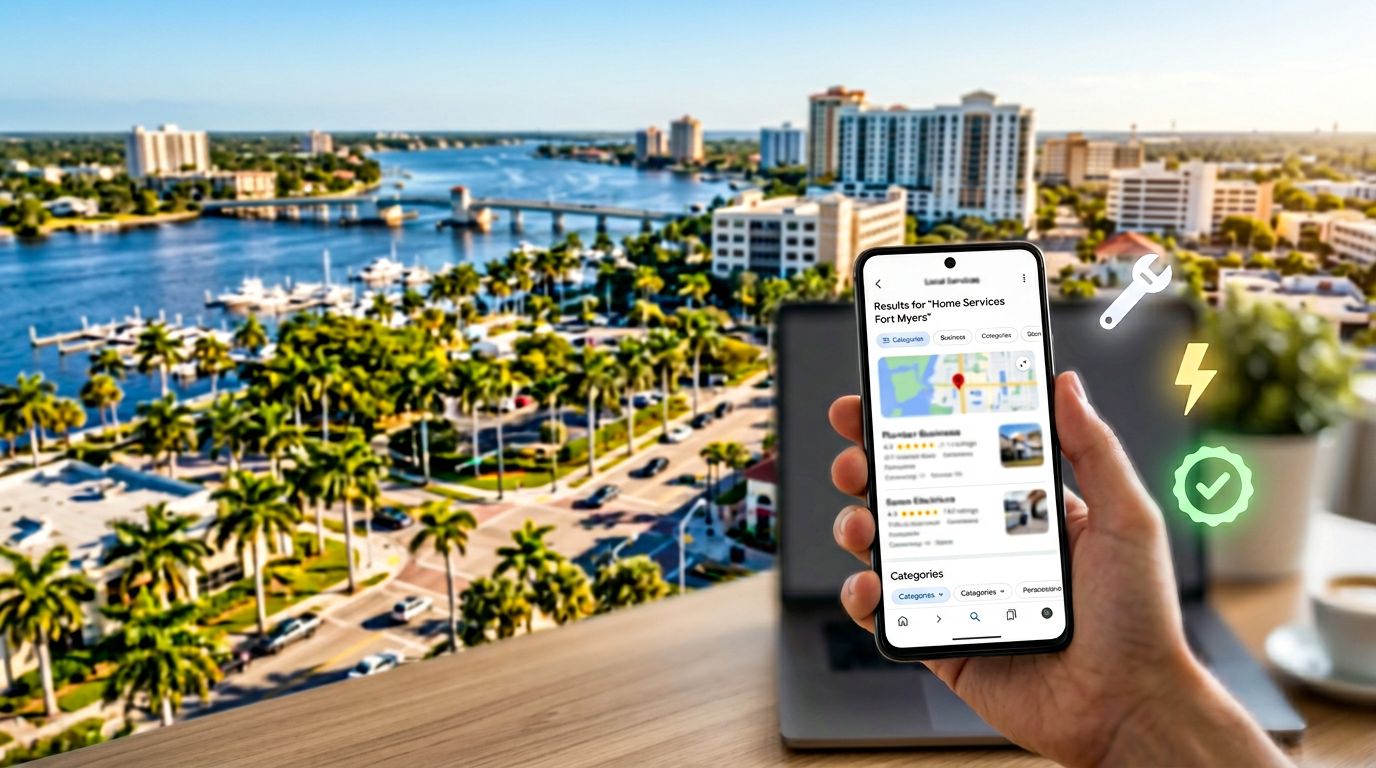
If your ad budget keeps drifting outside your real service area, the problem may be one setting, not your whole campaign. That happens a lot with google ads location targeting in Fort Myers. A plumber, roofer, cleaner, or HVAC company can burn money fast when ads reach people they can't serve.
In 2026, Google gives advertisers clearer location controls, but the default setup can still cast too wide a net. The fix is simple in theory, but details matter. When you tighten location settings, use smart exclusions, and track booked jobs by area, your spend gets much sharper.
Pick the right location option before you touch the map
Most local waste starts in the advanced location options, not in the keyword list. Inside Google Ads, you can choose whether ads show to people who are physically in your area, people regularly in your area, or people who only show interest in that area through their searches.
For Fort Myers service businesses, presence-based targeting is usually the right call. That means your ads show to people who are in Fort Myers or regularly there. If someone in another state searches your city name, that alone should not trigger your ad for a same-day service job.
Google figures location from device signals like GPS, WiFi, and IP data. GPS is the most accurate. WiFi is close. IP is broader and can be less precise. That mix is another reason to keep your settings tight from the start.
For most service companies, "interested in Fort Myers" is just a cleaner way to buy bad clicks.
There are a few exceptions. If you actively want second-home owners, absentee landlords, or relocation clients, broader intent can make sense. Still, that should be a choice, not an accident.
This setting matters even more for urgent services. A homeowner searching for AC repair from a hotel in Tampa is not the same as a homeowner sweating in Fort Myers. If phone calls drive most of your leads, a clean geo setup should sit inside a strong Google Ads account structure for Fort Myers.
Build a Fort Myers service area that matches real drive time
After you choose the right location type, build the map around how your crews actually work. Too many businesses target everywhere they might go, then wonder why costs rise and close rates fall. Your map should reflect travel time, truck costs, staffing, and job value.
This quick comparison helps keep the setup practical:
| Targeting choice | Best use | Common mistake |
|---|---|---|
| City targeting | Core areas like Fort Myers or Cape Coral | Assuming one city behaves the same everywhere |
| ZIP code targeting | Tight control over lead quality | Adding too many ZIPs before you have data |
| Radius targeting | Businesses with a strong home base | Using a wide radius that looks good on a map but fails in traffic |
| Location exclusions | Blocking dead zones or areas you don't serve | Forgetting to exclude places that still trigger clicks |
For many service businesses, radius targeting is a strong starting point. It works well when your office or crew hub sits in a clear service pocket. A 10 to 20-mile radius can be smarter than broad city targeting, but only if that radius matches real drive time.
Fort Myers is a good example of why maps can fool you. A short distance on screen may still mean bridge traffic, seasonal congestion, or long drive times. Therefore, don't target all of Lee County just because it feels safer. Add Fort Myers, Cape Coral, Estero, Bonita Springs, or Lehigh Acres only if you can serve them well and profitably.
Exclusions matter just as much as targets. If you don't take calls from certain neighborhoods, barrier islands, or far-out ZIPs, block them. Location settings and a solid Google Ads negative keywords list work together. One filters where traffic comes from. The other filters why people are searching.
Use location reports to spend more where calls turn into jobs
A clean map is only the start. After a few weeks, check location performance by city, ZIP code, and user location. Some areas will send cheap clicks but weak leads. Others will cost more up front and produce better jobs. The goal is not cheap traffic. The goal is profitable traffic.
When one ZIP closes at a higher rate, raise bids there. When another area sends calls that never book, lower bids or exclude it. This is where many Fort Myers accounts turn a corner. Instead of guessing, you let booked jobs shape the map.
Call-heavy campaigns need even tighter control. Run ads when someone can answer. Match your ad schedule to your front desk or dispatcher hours. If your team misses calls, location targeting alone won't save the campaign.
Tracking also has to tell the truth. Form fills and phone calls are helpful, but booked work matters more. If lead quality feels fuzzy, tighten your Google Ads enhanced conversions setup so bidding learns from better signals.
Google Ads also doesn't work alone. A prospect may click your ad, review your web design, compare your search engine optimization and SEO presence, check your social media, and return later through another path. The same person might see meta ads, facebook ads, or instagram ads before calling. After that, email marketing can help close the estimate that didn't book on day one. A good marketing agency keeps that message consistent, so Fort Myers prospects see the same offer everywhere.
Conclusion
Fort Myers service businesses do not need a bigger map. They need a smarter one. When google ads location targeting uses presence-based settings, realistic service areas, hard exclusions, and real lead tracking, wasted spend drops fast. Start narrow, watch booked jobs by area, and expand only when the numbers back it up.
Featured Resources
Check Our Latest Articles