Fort Myers On-Page SEO Checklist for Service Pages in 2026
A service page can look polished and still bring in nothing. If it doesn't match what people search, load fast, and prove you're the right choice, it won't earn many calls.
In 2026, Fort Myers on-page SEO is about clarity, trust, and page experience. Google reads structure and local proof better than ever. Buyers do too, and they often decide on a phone in less than a minute.
Use this checklist to tighten one page at a time, so your site supports real search engine optimization, better SEO, and more booked work.
Match each page to one service and one local intent
One page should target one main job. When a page tries to rank for AC repair, AC install, Fort Myers, Cape Coral, and Estero all at once, the message gets muddy. It feels like a toolbox dumped on the floor.
Start with the basics. Your title tag should lead with the service and location. Your H1 should support that same idea. Then your first paragraph should tell the visitor what you do, where you do it, and what happens next.
Keep the page focused on real buyer intent. If someone searches "emergency plumber Fort Myers," they don't want a company history lesson. They want fast proof, a service overview, and a way to call now.
A strong service page usually includes:
- Title tag : Service + Fort Myers + outcome
- H1 : A clear version of the title, written for people
- Opening copy : Who you help, where you work, and how fast you respond
- Subheads : Pricing, common problems, process, FAQs, and service area details
- Internal links : Related services, nearby locations, and contact paths
Keep the URL short and readable. Add natural variations in the copy, but don't repeat the same phrase like a drumbeat. Google is better at context now, and AI overviews often pull answers from pages that explain things plainly.
If you serve nearby cities, don't jam them all into one page. Build real location support instead. This guide to Fort Myers service-area pages shows how to cover nearby areas without creating thin, copy-paste pages.
Put local proof and trust directly on the page
A service page without proof feels rented. It may say the right words, but it doesn't feel lived in.
In 2026, Google keeps rewarding experience, expertise, and trust. Your visitors want the same thing. They want to see recent jobs, real photos, honest reviews, service details, and signs that you're active in Fort Myers, not just passing through.
Thin local pages don't build trust. They tell visitors you wanted coverage, not relevance.
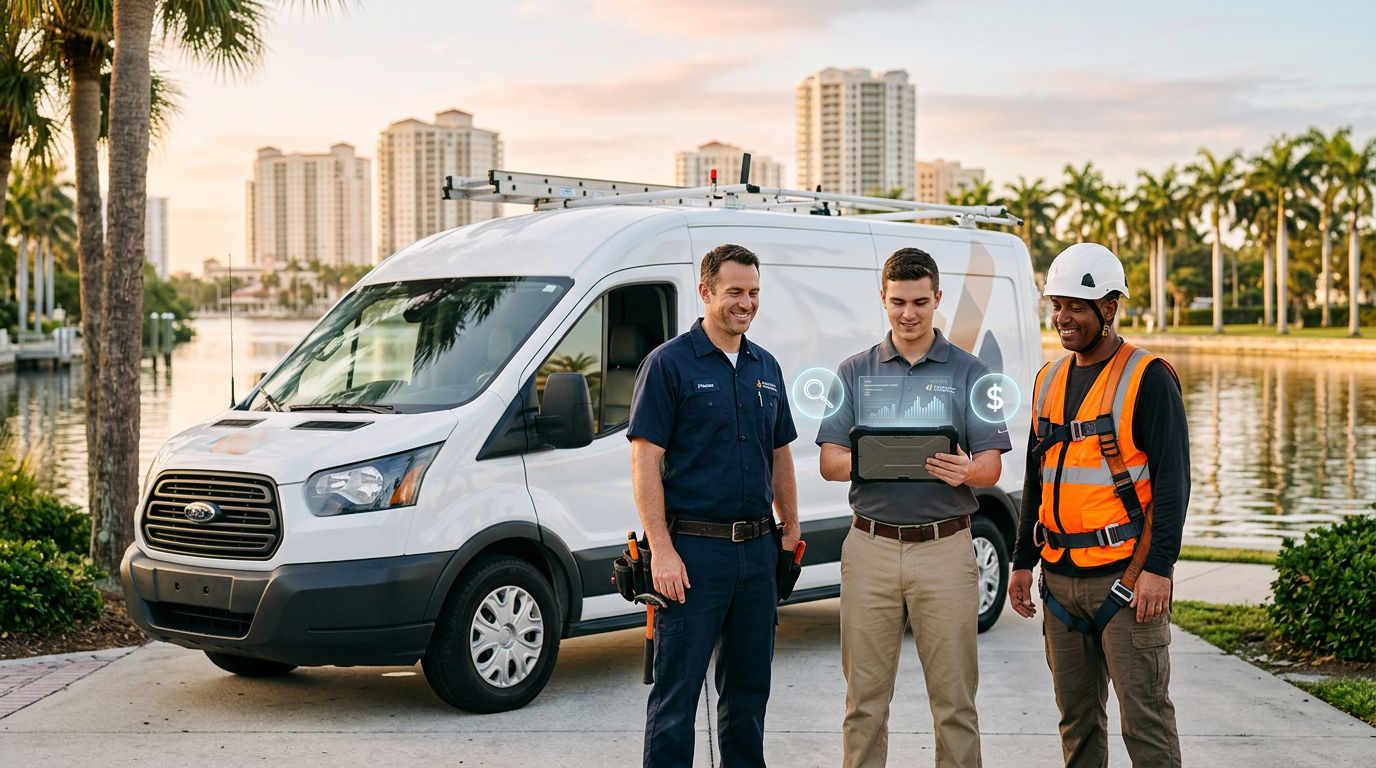
Add original photos from real work, not generic stock shots. Show trucks, crews, storefronts, before-and-after work, or finished jobs. If you mention Fort Myers neighborhoods, back that up with examples from those areas.
Also place trust signals where people hesitate, not only in the footer. That means license details, warranty language, review snippets, response times, financing info if it's true, and a clear phone number near the top of the page.
Your business info should match across the site and your Google Business Profile. If the page says one thing and your listing says another, that gap chips away at trust.
Schema matters too, because it helps search engines read your facts cleanly. LocalBusiness, Service, FAQ, and Review markup can support visibility when the on-page content matches the markup. This Fort Myers schema markup checklist is a good reference if your pages need cleaner structured data.
Write FAQs the way customers talk. Pages now perform better when they answer natural questions, such as pricing ranges, same-day availability, and service-area limits. That's good for rankings, and it's even better for conversions.
Make the page fast, mobile-first, and easy to convert
Speed is part of on-page SEO now, not a side issue. If the page drags on mobile, rankings and leads both suffer. For local service pages, getting the main content visible in under 2.5 seconds should be the goal.
That means compressing images, trimming heavy scripts, setting image sizes, and keeping the layout stable as the page loads. If buttons jump around, users leave. If forms lag, they leave. If your phone number hides below the fold, they leave.
For deeper speed work, use these Fort Myers Core Web Vitals fixes as a starting point.
Here are the page elements that usually move the needle fastest:
| Element | What good pages include | Why it helps |
|---|---|---|
| Hero section | Service, Fort Myers, clear CTA | Matches intent right away |
| Phone and form | Tappable number, short form | Captures urgent leads fast |
| Images | Real photos, compressed files, alt text | Builds trust without slowing the page |
| Internal links | Related services and city pages | Helps users and supports site structure |
Good web design also matters here. A service page should guide the eye like a front desk. The headline answers the problem. The proof calms doubt. The button moves the visitor forward.
Many owners notice page problems only after paying for traffic. If your google ads, facebook ads, instagram ads, or other meta ads send people to a weak service page, you pay for the click and lose the lead. The same mismatch hurts traffic from social media and email marketing.
That's why conversion and on-page SEO should work together. Your page needs one main call to action, a short form, a visible phone number, and clean message match from ad to page. If you want help tightening that part, this conversion optimization checklist for local service sites pairs well with your SEO updates.
Conclusion
Fort Myers on-page SEO works when each service page acts like a strong salesperson. It matches the search, proves you're local, loads fast, and makes the next step easy. Start with your highest-value page, fix the weak spots, then repeat the same standard across the site. If your pages still feel generic, a good marketing agency should tighten the copy, web design, and structure until the page starts bringing in real leads.
Featured Resources
Check Our Latest Articles